Why Intangible Assets are Your Most Valuable & Most Overlooked Strategic Resource
More Than What You Can Touch
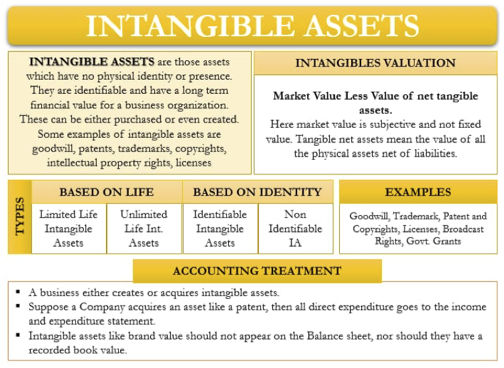
When business owners and executives think about assets, the list usually looks familiar: cash reserves, equipment, buildings, inventory, and perhaps some software licenses. These are the things that appear on a balance sheet, can be depreciated, and are easy to point to in a room. Yet the formal accounting definition of an intangible asset is an identifiable non-monetary asset without physical substance. That definition quietly encompasses some of the most powerful drivers of competitive advantage a business can possess. In today’s economy, that matters more than most leaders realize, because value has decisively migrated away from the tangible and towards the invisible.
Consider a striking data point. Ocean Tomo’s widely cited Intangible Asset Market Value Study found that intangible assets accounted for roughly 90% of the S&P 500’s total market capitalization in 2020, a figure that has remained near that level through 2025. In 1975, tangible assets represented 83% of that same market value, with intangibles making up just 17%. In less than fifty years, the fundamental driver of business value has completely inverted. Yet many leadership teams still run their organizations using a mental model built for the old economy; one that prioritizes what can be counted, insured, or photographed over what cannot.
The Value You Cannot See
That shift should fundamentally change how leaders think about strategy, investment, and risk. A company’s real strength is often not primarily in what it owns, but in what it knows, how reliably it operates, how well it makes decisions, and how deeply those capabilities are embedded in its systems and culture rather than in the memory of a handful of individuals. When those qualities are strong and intentionally developed, the business becomes easier to scale, more transferable at exit, more resilient during periods of disruption, and considerably harder for competitors to replicate.
Intangible assets come in several distinct forms. Relational capital covers the trust, authority, visibility, and professional relationships a business holds in its market. These are the outward-facing assets that shape how clients, partners, and prospects perceive the organization. But beneath those sits a second, equally important category: the internal intangible assets. These include the processes, systems, documented knowledge, and intellectual property that allow human talent to produce value consistently (structural capital), alongside the values, decision-making structures, cultural norms, and operating rhythms that shape how the business functions as a coordinated system (organizational capital).
Internal Capital Drives External Results
It is tempting to focus investment and attention on the outward-facing intangibles such as visibility in the market, authority in a niche, and strong client relationships. These absolutely matter. But they depend on inward-facing assets to sustain them over time. A business with a strong external reputation but weak internal systems will eventually find that the gap shows up in the client experience. Inconsistent delivery, poor decisions, slow responses, and operational bottlenecks are all ultimately expressions of structural and organizational capital deficits, even when they are perceived externally as a quality or service problem.
This interdependence is what makes internal intangible capital so strategically important. It is not just an operational efficiency matter; it is the engine that makes everything outward-facing sustainable. Strong structural capital means that excellent client delivery does not depend on one person having a good day. Strong organizational capital means that good strategy does not lose its force as it moves from the boardroom to the front line. Together, these internal assets are what convert individual talent and market reputation into durable, scalable, compounding business performance.
The Two Pillars of Internal Intangible Capital
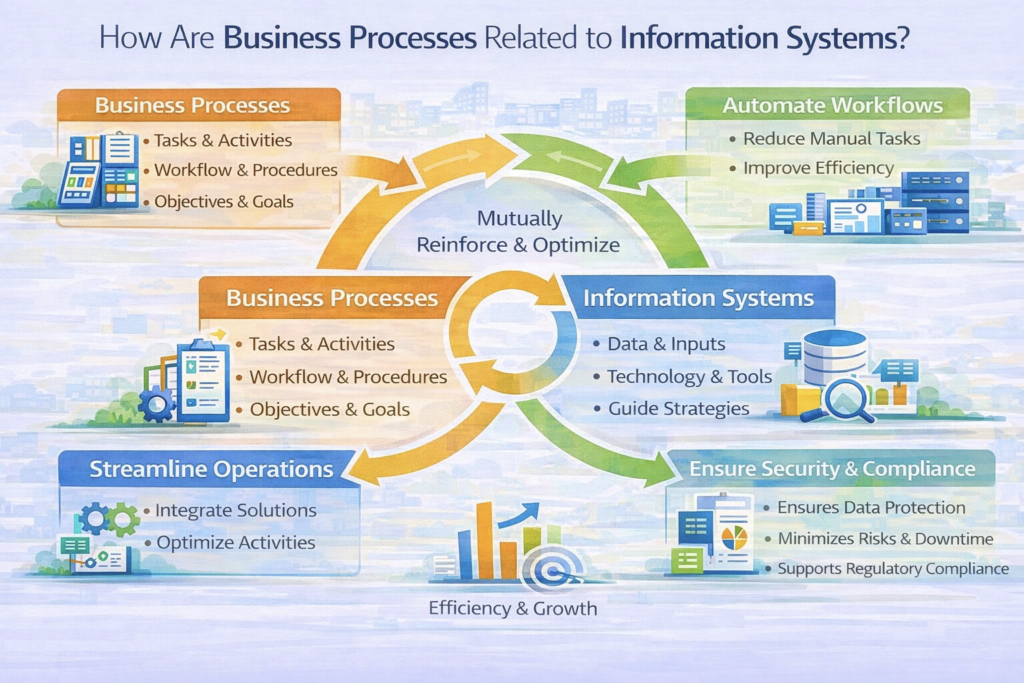
Structural capital is the codified knowledge, processes, systems, and intellectual property that exist independently of any individual employee. It is the knowledge that stays in the building when everyone goes home at night. This includes standard operating procedures, proprietary methodologies, technology infrastructure, patents and trademarks, data assets, and documented knowledge bases. Structural capital is what converts individual expertise into organizational capability. It is the mechanism by which what one person knows becomes something the whole organization can reliably do.
Organizational capital, by contrast, is the philosophy and systems a company uses to leverage its overall capabilities. It encompasses the values, decision-making structures, leadership culture, communication patterns, strategic planning rhythms, and accountability mechanisms that shape how the business behaves as a system. Where structural capital answers the question ‘do we know how to do this?’, organizational capital answers the question ‘are we organized to do this well, consistently, and at scale?’ Both are essential. Without structural capital, organizational culture has no execution engine. Without organizational capital, even the best-documented processes fail to translate into coherent, aligned action.
Why Owners and Executives Should Care Now
This is not an abstract idea reserved for large listed corporations. For small and mid-sized firms, internal intangible assets are often the single most important determinant of whether growth becomes sustainable or chaotic, whether the business is transferable to new leadership or locked in the founder’s hands, and whether an eventual exit realizes the company’s full potential value or falls significantly short of it.
Research on mergers and acquisitions consistently shows that a large proportion of deal value destruction can be attributed to organizational and cultural integration failures, not to market conditions or financial projections. Buyers and investors do not simply purchase revenue. They purchase the reasonable expectation that the revenue will continue, and continue growing, without the people who are selling it. That expectation is either supported or undermined by the quality of the structural and organizational capital they find when they look inside the business.
A Better Way to Think About Business Value
The invisible balance sheet deserves at least as much strategic attention as the visible one. A business with strong internal intangible assets is not simply more efficient in a narrow operational sense; it is more resilient when key people leave, more scalable when growth opportunities arise, more attractive to buyers and investors, and more likely to survive and thrive through leadership transitions. These outcomes are not achieved by accident. They are the result of deliberate investment in the systems, structures, and operating disciplines that sit beneath the surface of daily business activity.
Leaders who begin measuring, developing, and protecting their internal intangible capital are not adding extra administrative complexity to their businesses. They are building the infrastructure of competitive advantage – the kind that is genuinely hard to copy, deeply embedded in how the organization works, and compounding in value over time. In a world where 90% of enterprise value is already intangible, that is not a niche concern. It is the central challenge of business leadership.
About the Author
Bernd brings 35 years of executive and entrepreneurial experience to every transaction with leaders and owners of small to medium-size businesses. As an operational expert we focus on strategic direction, leadership development and successful execution to fulfill our clients personal and professional vision.