Compensation…
Cost or Value?
Compensation and Benefits Are Not a Cost Line. They Are a Value Lever.
For many business owners, compensation and benefits live in the budgeting conversation. The discussion usually starts with what the business can afford, what others seem to be paying, and what has to be offered to stay reasonably competitive. A good place to start. Let’s go a little deeper.
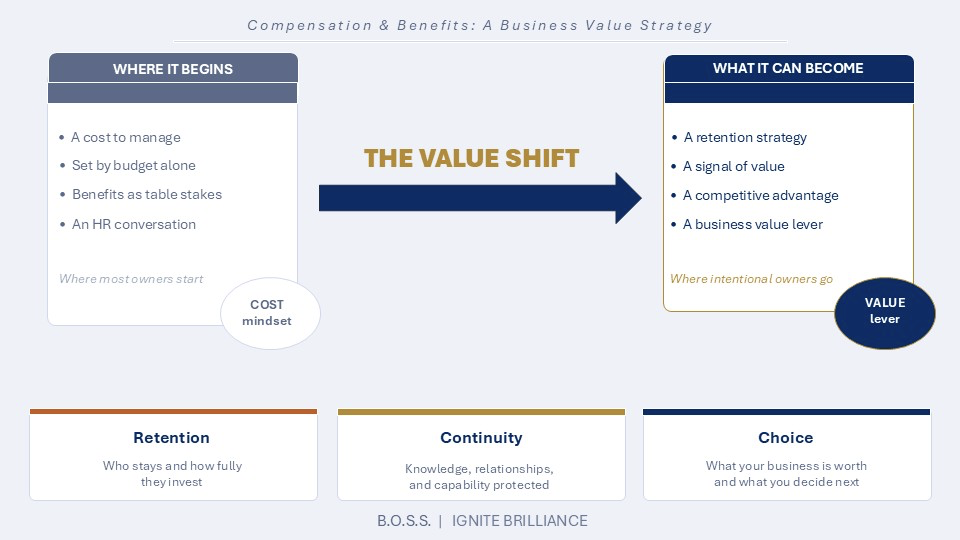
Compensation and benefits are more than an HR topic. They play a critical role in your business strategy. They are one of the most direct levers shaping who stays, who leaves, how fully people invest in what you are building, and what your business is worth. Not only at the moment of a sale or transition, but right now, and at every stage of growth between here and whatever you decide comes next.
Key people stay when they feel valued. The design of compensation and benefits is one of the most direct ways to communicate that. When pay is designed with intention, grounded in market data and tied to outcomes, it becomes a retention and stability tool. When it is not, avoidable risk quietly accumulates. Critical knowledge concentrates in too few hands. Important roles become harder to fill. And when the time comes to make a decision about the future of your business, whether that means selling, stepping back, building a leadership team that can run without you, or simply continuing to grow, the people system underneath your operation will either support that decision or complicate it.
The owners who have the most choices are rarely the ones with the biggest revenue numbers. They are the ones who built businesses that run well, retain talent, and do not depend entirely on the owner to function. Compensation and benefits are two of the most direct tools available to build exactly that. They are part of the architecture of business value, and part of what determines what you get to choose next.
From a cost mindset to a signal mindset
A helpful reframe is to move from thinking about compensation as a cost to manage to thinking about it as a signal to design. Compensation tells employees how their contribution is seen. Benefits tell them how seriously the business takes their well-being and long-term future. Together, those choices communicate what kind of company this is, what it values, and whether it deserves long-term commitment.
That does not mean offering the highest salaries, top-tier health coverage, and a long list of perks. One of the strongest principles in this work is that owners do not need to offer everything. They need to offer the things their people value most, and the things their competitors do not always deliver well. That is a more strategic standard. It moves the conversation away from matching the market on everything and towards making thoughtful choices that matter to the people you most need to keep.

Market positioning and pay structure
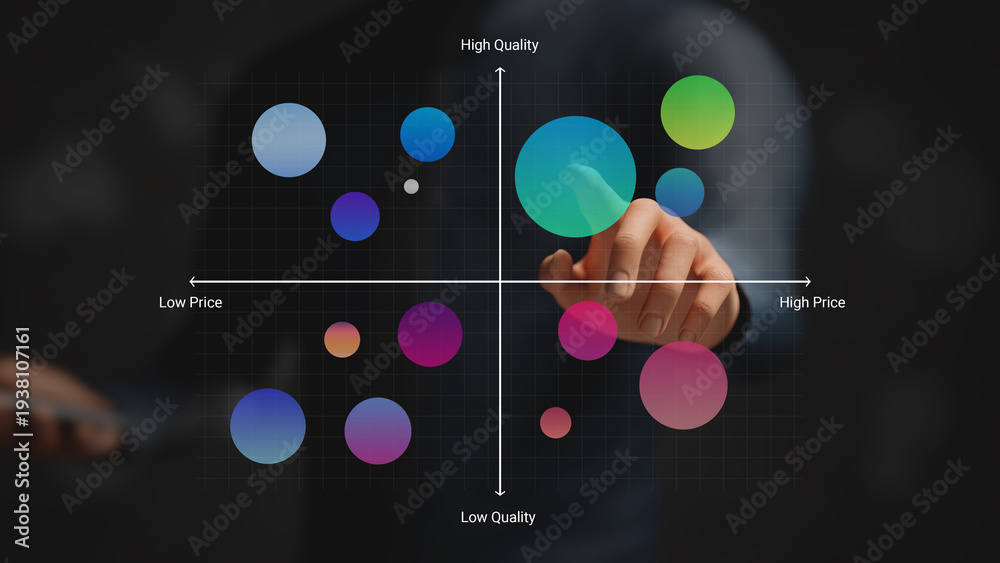
This is where market positioning becomes important. Owners who invest in understanding their labor market, what comparable roles earn, where their key people sit relative to the market, build a credible foundation for retention. The data is more accessible than most people expect. Being competitive does not mean being the highest payer. It means understanding your labor market well enough to know where your roles sit, what your key people could reasonably earn elsewhere, and what level of compensation gives you a credible chance of retaining the talent that matters most.
That requires some structure: market data, role clarity, and pay ranges rather than one-off decisions made in isolation. A minimum, midpoint, and maximum for each role. Not complicated, but intentional.
Documented pay ranges do more than improve internal fairness. They signal operational maturity. A business with defined ranges and an explainable compensation philosophy is easier to manage, easier to scale, and easier to defend in due diligence. It reduces the impression that important employment decisions live only in the owner’s head, and that alone can make a business feel more transferable.
Variable pay and incentive design
The same logic applies to incentive design. Base pay keeps people. Incentive pay aligns them to outcomes. Many small businesses still rely on informal arrangements, discretionary bonuses, loosely understood promises, unwritten expectations. Those can work in a stable environment. They become fragile under growth or transition.
A documented incentive structure tied to the right outcomes, revenue, margin, customer retention, strategic milestones, creates clarity and alignment at the same time. A team that is aligned to the same outcomes you care about is also a selling point to buyers. It tells them that this business is not built around the owner’s relationships alone.
Benefits as a retention and value strategy

Benefits deserve the same level of intentionality. Health insurance, retirement plans, flexibility, professional development, and employer contributions all shape whether a team feels protected and invested in. The strongest packages are not the most expensive. They are the ones that reflect what the workforce actually values.
Strategic concentration is usually more effective than broad but shallow coverage. Knowing what your people value most, and focusing there, is both more affordable and more impactful.

What this looks like to a buyer
A business with documented ranges, competitive benefits, and visible support for key people inspires buyer confidence. The financial statements may look identical to a less structured competitor. The perceived durability of those results will not.
The starting point is simple: identify one or two critical people, not the ones with the biggest titles, but the ones whose loss would matter most. Their loss would break something, slow something down, or make something disappear. Then ask one practical question: what in the current total rewards design would make those people stay if they received an outside offer tomorrow?
If the answer is clear, you have something to build on. If it is not, that is your starting point. Owners who treat compensation and benefits as part of the architecture of business value, rather than a line item to minimize, build businesses that are stronger, more resilient, and worth more. And businesses that are worth more give their owners more choices about what comes next.
The opportunity here is bigger than a pay review. It is about designing a people system that supports continuity, trust, and growth — for today, and for whatever you decide comes next.
About the Author

Robin Clukey, SPHR, of IGNITE BRILLIANCE will facilitate this session. Robin helps business owners protect and grow their most valuable asset: their people. At IGNITE BRILLIANCE, she builds HR infrastructure, strengthens leadership capacity, and guides organizations through transitions, bringing Fortune 100 expertise scaled to the needs of small and growing businesses.